

The Nordic Fashion and Design Law Network has been launched

In November 2025, eight Nordic professors and researchers – and a guest star from the UK – gathered in Stockholm to establish an academic network for the development of fashion and design law research, teaching and supervision. This article shares the highlights of this ‘Nordiskt samarbete’.
Earlier this year, professor Frantzeska Papadopoulou, Stockholm University, and yours truly – docent of fashion law Heidi Härkönen, University of Turku – had an idea. We wanted to strengthen Nordic research collaboration in the field of fashion law. We gathered a small but efficient team of some leading Nordic IP academics and fashion researchers with an interest in interdisciplinary IP and fashion/design-themed research. The first meeting of the Nordic Fashion and Design Law Network (NFDLN) took place on 27–28 November 2025 in Stockholm.
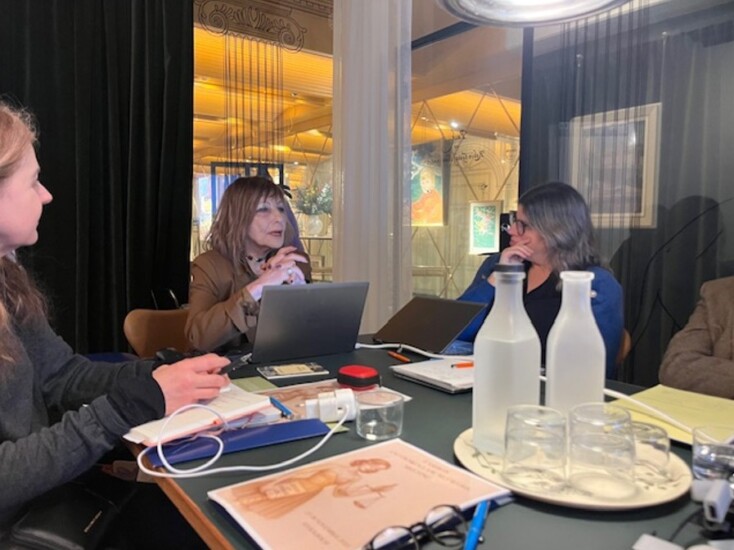
In addition to Professor Papadopoulou, we were joined by two legendary figures of Nordic IP law from Sweden: Professor Emerita Marianne Levin and Lonely Cowboy from Stockholm University. Representing the effortless-but-always-so-chic Danish style were Professor Jens Schovsbo from the University of Copenhagen and Associate Professor Stina Teilmann-Lock from the Copenhagen Business School. Professor Ole-Andreas Rognstad (University of Oslo) and Associate Professor Astrid Heimer (OsloMet) offered interdisciplinary perspectives, as did Natalia Kataila (Metropolia University of Applied Sciences), who has extensive experience of combining legal aspects with fashion research. Kataila and I represented Finland. In addition to these Nordic experts, we invited Professor Johanna Gibson from Queen Mary University of London to talk about her LLM in Fashion Law programme and provide feedback on our ideas for Nordic cooperation.
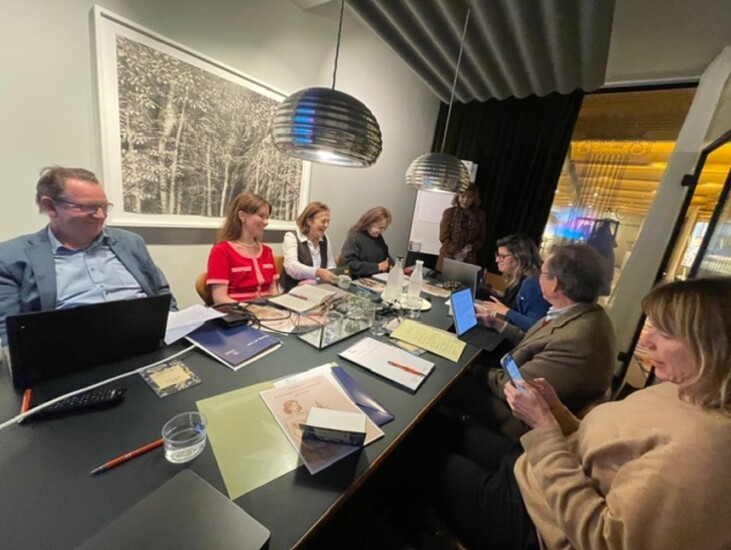
If you have attended the Nordic and German IP Network meetings, you may recognise many of the names above from those events. Indeed, the NFDLN is a spin-off of that network. Many of us know each other precisely because of the Nordic/German IP research tradition, and this has now opened the door to an exciting and novel collaboration.
Background
Papadopoulou and I began the workshop by providing an introduction to the concept and objectives of this network. The Nordic countries have been at the forefront of fashion law research, and several academics from across the Nordic states have expressed an interest in fashion law. However, there has not yet been any Nordic cooperation in this field. Cooperation between Nordic countries in fashion law research could provide fascinating insights into IP law, especially given the shared history of Scandinavian copyright and design laws, and the shared understanding of some fundamental IP law principles. Joining forces to delve into such themes could produce fascinating research outputs with practical significance, particularly for the creative sectors in the Nordic countries. Furthermore, our collaboration aims to incorporate environmental, social, and cultural sustainability perspectives into the interpretation of fashion sector legislation to secure a sustainable future for Nordic fashion.
Fashion law in different Nordic jurisdictions
We compared the state of fashion law research, teaching, and case law in the Nordic countries. It was interesting to see how different fashion law looks in Finland, Sweden, Denmark and Norway. In brief, although Finnish lawyers have been discussing ’fashion law’ (muotioikeus) for a considerable amount of time, the term itself is not as well-established in other Nordic languages. In Norway and Denmark, in particular, discussions about fashion and IP fall under the general umbrella of ’IP and applied art’. While litigation in the fashion and design sectors is common in Denmark and Sweden and has resulted in a significant body of case law, such cases are rather rare in Finland and Norway. For example, the last time the Finnish Supreme Court assessed the protection threshold for works of applied art was in 1980 (KKO:1980-II-3). Below, I briefly describe the state of fashion law in the different Nordic jurisdictions.
Finland
Since 2013, Finnish lawyers have been discussing about the concept of ‘muotioikeus’. One reason for the growing interest in fashion law at the time was the plagiarism scandals involving the design house Marimekko. To date, one legal PhD thesis has been written in the field of fashion law (2021). Additionally, at least one PhD thesis in fashion research has discussed legally relevant concepts such as authorship and originality in fashion creation (2022). The status of fashion law among other legal disciplines has recently been discussed in Lakimies, perhaps the most significant Finnish legal journal. While there have been many ad hoc fashion law lectures at various universities over the past decade, only the University of Turku Faculty of Law offers fashion law courses. Three courses are available: Fundamentals of Fashion Law (3 ECTS), Fashion Law Specialisation/LL.B. Thesis Course (12 ECTS) and Fashion Law with Practising Lawyers (2–5 ECTS). Fashion and design schools have not included legal studies in their curricula; however, interest in IP issues is rising, especially due to various AI-related matters. Unfortunately, there is currently no one working on a PhD in fashion law. There is one Finnish-language textbook on fashion law: Muotioikeus (Edita Lakitieto, 2024). This book, written by practising fashion lawyer Emilia Hodge and Heidi Härkönen, draws on their practical experience and research. It is intended for practising lawyers, designers, fashion executives, and law and fashion students. The Finnish Fashion Law Association, established in 2014, is an active network of over 150 lawyers, designers and fashion experts. Although fashion law is an extremely popular topic in Finland, there is barely any recent, interesting case law relating to it.
Sweden
Interest in fashion law in Sweden has grown steadily. In May 2024, Stockholm University organised a fashion law conference with around 60–70 attendees, half of whom were from the fashion and design industries. According to Professor Frantzeska Papadopoulou, the event marked the beginning of collaboration between the legal and fashion communities to explore ways of working together towards a more sustainable, innovative and collaborative future. Stockholm University has also organised fashion law teaching and a summer course in fashion law. Guest lectures from foreign universities are often included in the teaching. There is also one PhD student working on a fashion law thesis. Papadopoulou and Levin, the Swedish team, highlighted their interest in the multidisciplinary and interdisciplinary aspects of fashion law. A key publication in the area of fashion law is Marianne Levin’s Formskydd, which was groundbreaking when it was published in 1984. Levin has played a pivotal role in the development of design protection in Sweden, the Nordic region and Europe. There is interesting case law emerging from Sweden: in addition to the CJEU case Mio, which concerned a table, the shape of perfume bottles and their IP protection has been the subject of litigation.
Denmark
It is fair to say that the amount of fashion law-related research in Denmark is very high simply because Jens Schovsbo and Stina Teilmann-Lock both work at Danish universities. Both have been working at the intersection of IP and design for decades. However, an explicit concept of ’fashion law’ does not really exist in Denmark, although some academics may discuss it. Regulation of fast fashion is a popular topic at the moment. A significant and well-developed body of fashion law-related case law exists with regard to copyright, a topic that Stina Teilmann-Lock presented on at the Helsinki IP Summit in October. Furniture design seems to be generally more susceptible to litigation than garments and accessories. The Ganni buckle ballerina case has recently gained a lot of attention. The Danish Supreme Court has rigorously applied the CJEU case C-683/17 Cofemel. Nevertheless, there still seems to be a general reluctance to protect fashion and design products via copyright. Additionally, the scope of protection for works of applied art has traditionally been limited in Denmark. While there is a significant body of copyright case law, the same cannot be said for design rights. Currently, Danish law schools do not offer fashion law courses, although students are interested in the subject. Nevertheless, Teilmann-Lock teaches strategic design law and ethics at the Copenhagen Business School.
Norway
When it comes to the notion of ’fashion law’, Norway is similar to Denmark in that fashion law is not widely recognised as a distinct legal discipline (yet). However, things might be changing. Although there are not many fashion law specialists at the moment, demand is increasing as Norwegian fashion becomes more popular around the world. Sustainability and its regulation are big trends. It is worth noting that Norway is not an EU Member State, so EU trademarks and design rights do not apply in there. The number of design registrations and litigation in design law matters is relatively low. However, Norway has an Unfair Competition Council, a private litigation system for businesses. A look at this council’s recent case law suggests that fashion law is growing in importance in Norway. Currently, Rognstad and Heimer are conducting interdisciplinary fashion law-related research with Teilmann-Lock. Rognstad is a law professor, while Heimer is an expert in various aesthetic, practice-based disciplines, such as design, art and crafts. We expect to see a publication soon!
Lessons Learned from the UK
The UK’s first and only Fashion Law LLM was successfully launched in 2025. Directed by Professor Johanna Gibson, the programme has a team of lecturers, researchers and fashion law practitioners who act as teachers and mentors for the students. This LLM programme offers a unique opportunity to specialise in this thriving and growing area of legal practice and research. Students will study the laws and regulatory frameworks applicable to the fashion industry, developing a broader understanding of socio-cultural and policy issues, including social justice issues in fashion. These include themes such as cultural appropriation, fast fashion and sustainability. The programme has proven to be extremely popular. You can read more about the programme here.
The way forward
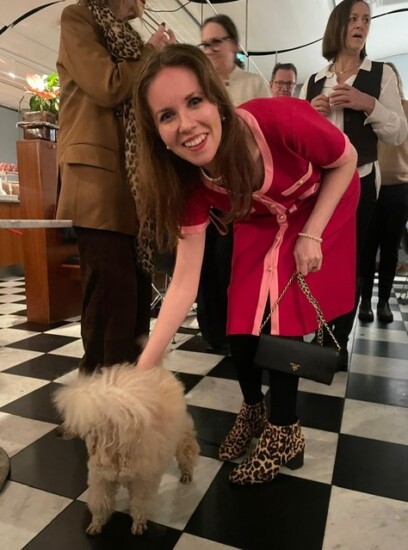
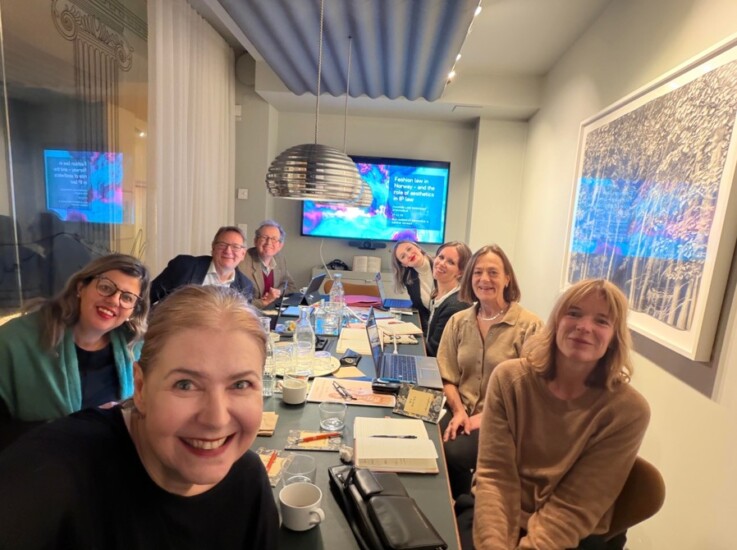
As well as spending time in the conference room at the Mornington Hotel in Stockholm City, we explored the Swedish art and design culture at the Nationalmuseum and enjoyed a lovely dinner at Berns Asiatiska. We discussed not only the theoretical aspects of fashion, design and law, but also examined how couture details are implemented in a cardigan jacket manufactured using traditional Chanel techniques (as detailed in Claire B. Schaeffer’s book, based on her reverse engineering work). This led us to discuss slow fashion and its importance in today’s world.
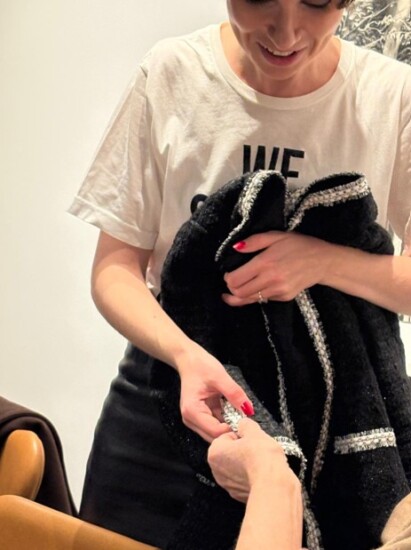
The discussions at our network meeting were extremely inspiring, and we are committed to building a vibrant Nordic research environment. We plan to co-develop research projects that address the unique challenges and opportunities within Nordic fashion and design law. We also intend to collaborate on national and international funding applications and to create regular forums for scholarly exchange, workshops and co-publications. We aim to foster connections between legal scholars, designers, and cultural institutions to ensure research remains grounded in practical creative processes, which is why we promote interdisciplinarity. If we only had lawyers talking about fashion law without any input from the fashion and design sectors, the discussions would inevitably lack a key ingredient of this discipline. Thus, Astrid Heimer’s and Natalia Kataila’s presence provided invaluable perspectives to the legal discussions in our first network meeting. Looking forward for out next gatherings!