
United for Intangible Assets: Introducing the New IPRUC Directors

New directors were elected for IPRUC and they started their term 1.1.2026. The new directors are Anette Alén, Rosa Ballardini and Juha Vesala. Vesala has also been a co-director earlier with Tuomas Mylly, whose term ended 31.12.2025. This article presents the new directors and their ideas for the future, as well as greetings from the previous director duo. Professor Nari Lee from Hanken continues as a Deputy Director.
Who are you?
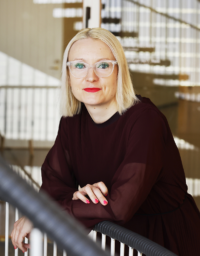 I am Anette Alén, legal scholar, sports enthusiast, and art lover. I am working as Professor of Civil and Commercial Law, while also currently acting as Vice Dean for Societal Interaction at Faculty of Law, University of Helsinki. My research focuses on technology law, including platforms, AI, data and IPR (copyright in particular), while ranging across various fields of creative and commercial activity in interdisciplinary settings. Many times, I have also examined my research topics from media and communications perspectives—indeed, I also have a Degree from the Faculty of Social Sciences. I have been trained on the bench (in Finnish ‘varatuomari’) and I am a qualified teacher. Currently, I have been working to promote AI literacy for adults and law students. In terms of other positions, I am on the Board of Finnish Lawyers’ Association, among others. Previously, I have also been in the Finnish Copyright Council.
 I am Rosa Ballardini, an Italian scholar adopted by the Finnish IPR community since 2007. I am a Professor of Intellectual Property Law and Vice Dean for Research at the Faculty of Law, University of Lapland. My academic path is pretty international, as I hold a PhD from Hanken (Finland), an LLM in IT and IP Law from the University of Edinburgh (Scotland), and a law degree from the University of Brescia (Italy). My current work focuses on the intersection of IP law, technology, and sustainability, with a strong interest in how IPRs’ power dynamics shape innovation, and participation in decision-making. I enjoy engaging in multi- and trans- disciplinary research, which is reflected in the way I approach many of my research projects – I have collaborated with scholars from diverse fields, as well as with industry partners and policymakers, to tackle questions that benefit from a broad, cross‑sector perspective. Societal impact is a central priority for me, and I work toward it by engaging with a wide range of stakeholders, including serving on the Board of the Finnish Association for Industrial Property Rights (STY).
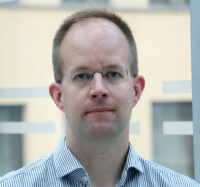 I am Juha Vesala and work as a University Lecturer at the University of Turku, Faculty of Law, and continue as a co-Director of the IPR University Center. My background is in competition law and IPRs – I wrote my doctoral dissertation on how EU competition law should be applied to IPR related practices. Since then, I have expanded my horizons and apart from IPR and competition law have examined artificial intelligence, data, sustainability issues from also other legal perspectives. At the moment, my research focuses on AI issues, particularly in health and social care contexts, as a project leader in one project dealing with the AI Act and sub-project leader in a consortium addressing legal issues more broadly. I enjoy this kind of multi-disciplinary work and close interaction with the industry and practitioners. As vice-chair of the Finnish Copyright Council, for example, it is interesting to think about legal issues also from a practical perspective.
What is your overall vision for IPRUC?
The shared vision of the incoming co‑directors builds on the strong legacy of the Centre, established in 1999 in response to a national need to strengthen what was then a scarce and fragmented IPR education and research landscape in Finland – at a time when intellectual property was rapidly becoming essential for economic development and innovation. ”Our vision builds on this momentum, with a clear focus on advancing the development and use of IPR to foster sustainable innovation and long‑term growth”, the new directors state.
The new directors’ vision sets out an ambitious path to elevate the Center’s role as a leading force in IPR education, research and knowledge production. ”One of our aims is to strengthen the position of the Center as a leading cross-institutional hub for IPR education in Finland by continuing to offer a variety of educational activities and initiatives, while supporting the development of new types of courses”, says Alén. The vision focuses on expanding the Center’s presence in cross‑disciplinary initiatives, while also enhancing services offered to researchers and junior scholars across member universities. “Finland already benefits from a vibrant and well‑connected IPR community thanks to the outstanding work of the IPRUC. Our goal now is to take this excellence to the next level by driving high‑impact research initiatives capable of securing important funding, for instance from Horizon Europe”, Ballardini emphasizes. This vision is also closely aligned with Finland’s broader economic ambitions. ”Innovation and technological development are engines of economic growth, while innovation capacity is a decisive factor. To support this, we need cutting‑edge education, research, and knowledge production that support policymakers and organizations”, the new directors explain. Aligned with recent priorities set by the ministry, a key objective of the new directors’ vision is also to reinforce doctoral education in the field of IPR and promote academia-industry doctoral projects. Related to this, another important part of the vision is to reinforce the Center’s societal impact and outreach. ”By collaborating broadly with stakeholders, we aim to contribute to Finnish competitiveness. Moreover, we aim to support policy-makers in a more structured way”, Vesala explains.
The new directors’ vision for the IPR UC is powered by their complementary expertise and a strong commitment to a collaborative leadership model – one that mirrors best practices already adopted across member universities. “Each of us brings extensive experience in multidisciplinary IPR work, and together we form a team with a deep understanding of the field. After more than a decade of working side by side, we have built a foundation of trust, respect, and seamless cooperation that enables us to reach consensus and move forward with confidence”, the directors emphasize.
How does the bridge between terms and the plans for this new term align?
”It is a natural continuation. During the previous term, as co-directors with Tuomas Mylly, the IPR University Center undertook many new actions and initiatives ranging from research projects, new courses, policy related expert tasks to organization of events. The co-directorship with Tuomas worked well and naturally, and now with the new co-Directors, and of course Education Manager Hilkka Honkanen and Executive Manager Auri Vainio, I look forward to continuing development of the Center with a focus on interaction between the research community, and society. Both stand to benefit from collaborating on issues relating to IPR, data and innovation”, Vesala says.
What do the previous director Tuomas Mylly want to say about his term and to the new directors?
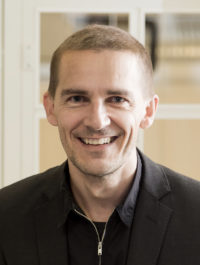 Tuomas Mylly acted as co-director with Juha Vesala during the previous term. ”The co-directorship model was a successful experiment. The two co-directors decided through consensus without any hierarchy or specialisation.” Mylly says. The working of the model necessitated mutual respect, discussions, constant sharing of information and new ideas together with the permanent staff. It enabled sharing of tasks based not only on special interests but also on other schedules and tasks of both directors. This was important, as the directorship did not reduce the directors’ other university duties. “Having the possibility to discuss ideas, plans and emerging issues improved the quality of co-operation. Collaboration with the two permanent employees of the Center, Auri and Hilkka, was similarly fruitful. Auri Vainio and Hilkka Honkanen were responsible for all the daily operations of IPR UC such as communication with stakeholders, webinars and events of the IPR University Center. Auri’s long experience and networks eased many things along the journey. Hilkka’s pedagogical insights and approach made planning of online-courses, university collaborations smooth and professional. Working with both permanent employees, as well as IPRUC’s trainees, was also a lot of fun!”, Mylly states.
Some of the key highlights of the term for Tuomas were, among others, the recruitment of a new Head of Education (Hilkka), participation in the preparation of the national IP strategy and IPRUC’s role in its implementation, Business Finland -funded research project on standardisation and other IP research projects, as well as the broadening of IPRUC’s focus to cover AI, data and digital services law.
Tuomas wishes all the best and success for the new directors and continuing director Juha Vesala. Although Tuomas does not continue as director, he will likely contribute to the diverse activities of IPR UC also in the future. ”My term as co-director taught me a lot and made me realise the unique value of IPRUC. It connects academics, public servants, judges and private sector IP actors in Finland and benefits all – beyond member universities and members of the background association. The Center is a way bigger actor in the Finnish and international IP scene than its resources would suggest. I hope that all IP actors and academics in Finland will contribute to its future success and benefit from its activities.”, Tuomas says.
Kirjoittajat