

Trademarking Cultural Heritage in the EU: The Vigeland Case and the Absolute Grounds of Public Policy and Morality Revisited

Introduction
Not all words, phrases, symbols, or designs are eligible for trademark protection. While a mark must first meet basic requirements—such as distinctiveness, non-genericity, and freedom from prior use by others—these alone are not sufficient for registration. Trademarks must also adhere to broader legal principles, including conformity with public policy and morality. This means that even if a mark is distinctive and unique, it could still be refused if it conflicts with accepted societal values or undermines public interests. In such cases, public policy and morality act as critical safeguards, ensuring that trademark law does not serve to legitimize harmful or inappropriate uses of certain signs. Signs such as ‘Bin Ladin’ (R 176/2004-2, Falcon Sporting Goods AG), ‘Screw You’ (R 495/2005-G, Screw You) and ‘La Mafia’ (T-1/17 La Mafia Franchises) have all been denied registration on these grounds.
Public policy and accepted principles of morality, enshrined in Article 7(1)(f) EUTMR, is typically applied to signs deemed shocking or offensive due to i.e. profanity, racism, discrimination, links to terrorism, illegal drugs, etc – you get the gist. The provision, however, took an intriguing turn in 2017, when the European Free Trade Association (EFTA) Court applied the absolute ground to deny trademark protection to the Municipality of Oslo for several pieces of work made by famous Norwegian sculptor, Gustav Vigeland. Spoiler alert – these works are not per se shocking or offensive in and of themselves.
This brief article begins with an overview of the absolute ground of public policy or accepted principles of morality. It then explores signs with a positive connotation, with a specific focus on cultural signs. Thereafter, it discusses the common approach to denying trademark rights to cultural signs and the associated issues. The article then examines the Vigeland decision (E-5/16, Vigeland), where the EFTA Court introduced a new approach to denying trademark rights to cultural signs by drawing upon Article 7(1)(f) EUTMR. Following this, the article dissects the significance of this innovative approach, highlighting its benefits and disadvantages. Finally, the article concludes.
The article summarizes selected parts of my Master’s thesis ‘Public Policy and Morality as a Bar to Obtaining Trademark Protection: Status of Cultural Signs in the Assessment of Article 7(1)(f) of the EU Trademark Regulation’ (University of Helsinki, 2023). For a more elaborate analysis, please refer to the complete thesis.
Disclaimer: Decisions of the EFTA Court are not binding on the CJEU or EU Member States’ courts. However, the EFTA Court’s rulings may influence the development of EU case law, as the CJEU considers its jurisprudence explicitly and implicitly when interpreting EU law.
Overview of Article 7(1)(f) EUTMR
Article 7(1)(f) EUTMR contemplates the prohibition of trademarks on two distinct grounds: trademarks that conflict with public policy and trademarks that clash with accepted principles of morality. While these grounds often overlap, they can also be considered independently (T-1/17 La Mafia Franchises). Often, however, signs caught by Article 7(1)(f) EUTMR are bound to be both contrary to public policy and accepted principles of morality, and therefore a distinction between the two is not necessarily always made. To better understand these two grounds individually, a brief explanation of each will now follow.
Public policy
Public policy refers to rules enforced from the top down by public authorities and requires evaluation using objective criteria. According to the EU Intellectual Property Office (EUIPO), all legal rules necessary to maintain a democratic society and the rule of law fall under the governance of public policy. Common examples of signs conflicting with public policy include those related to terrorism, criminal organizations, racial offensiveness, drugs and other illegal substances. Public policy differs from one country to another and from one era to another, thus each Member State is free to determine the values and norms to be respected in their society.
Accepted principles of morality
Morality refers to fundamental moral values and standards to which a society adheres to at a given time. Unlike public policy, which is imposed from above by public authorities, moral values are shaped from the grassroots level. To objectively assess what a society considers to be morally acceptable, the values and norms should be determined according to the social consensus existing in a given society at the time of the assessment. Morality requires an assessment based on subjective values; however, these must be applied as objectively as possible by the examiner. Numerous categories of signs have been denied trademark protection due to their violation of accepted principles of morality, including those associated with totalitarian, despotic and racist political regimes, sexism, misogyny, homophobia, religious symbols, sexually suggestive content, historical figures, insults, and indecent language.
Factors considered in Article 7(1)(f) EUTMR assessment
In assessing whether a certain sign could fall foul of Article 7(1)(f) EUTMR, trademark offices and courts assess the sign according to numerous factors which interact with each other rather than apply in isolation.
One important factor examiners must determine is the relevant public in question for each individual sign they assess. Under accepted principles of morality, the relevant public is defined according to a reasonable consumer with average sensitivity and tolerance thresholds, but one that cannot be easily offended. Under public policy, the relevant public is defined in a similar manner, however even if the mark does not address a specific public or group of consumers, it may still be found to be contrary to the absolute ground if it encourages or trivializes an infringement of a fundamental interest of the concerned Member States. In line with the principle of a unitary trademark regime, if a sign is contrary to public policy or morality in any region of the EU, even if in only one Member State, it will prevent registration for the entire Union.
Examiners must also assess the meaning and perception of the mark as understood by the relevant public, determine the territory in which the sign could have an adverse effect, examine the nature of the goods and services for which the mark is applied for, investigate potential prior use of the sign on the market, consider the time at which the application for registration was made as well as determine the social context. The right to freedom of expression must also be considered by examiners when applying the absolute ground, balancing the applicant’s freedom to use words and visuals in the signs they wish to register with the legitimate interests of the public and consumers to avoid exposure to unpleasant trademarks.
Signs with a (highly) positive connotation
In addition to signs with a negative connotation, the application of Article 7(1)(f) EUTMR also extends to signs with a highly positive connotation and signs of high symbolic value. Such signs refer, for example, to public interests relating to cultural heritage, religion or nationhood. Granting trademark rights to such signs could lead to the dilution of their original positive meanings through commercial use. The refusal to register signs with a positive connotation are, however, relatively rare. In such cases, the connotation of the sign to be refused must be exceptionally positive.
Examples of such signs which have been refused registration include a symbol of the Christian Latin cross (R 510/2013-1, Représentation d’une Croix), a symbol of the founder and first president of the Republic of Turkey (R 2613/2011-2, Ataturk) and the religious symbol of Messias (German Federal Patent Court, Case 27 W (pat) 85/92, [1994]).
Within the category of signs with a highly positive connotation, it is important to make a distinction between symbols associated with religious worship and those that may be of broader cultural significance to communities. The reason for this is that the way in which these two are treated when assessing trademark applications is different. Religious signs are more often than not caught by Article 7(1)(f) EUTMR. The Board of Appeals of the EUIPO has held that it is advisable to keep any signs that seriously infringe the religious values of a significant group of people off the register. If not for moral reasons, then at least the signs should not be registered on the basis of public policy, as the registration of religious signs may lead to social unrest (R 495/2005-G, Screw You, para 20). Cultural signs, on the other hand, are not granted the same weight by examiners, and are not outrightly excluded from trademark protection in the same manner as religious signs.
Cultural signs in EU trademark law
Cultural signs bear cultural or historical significance for a community or group of individuals. These signs may take the form of traditional cultural expressions deeply embedded in indigenous and local communities or as symbols of cultural heritage, for example to a larger community such as an entire nation. Cultural signs can also be contemporary. Due to the potential broadness of the interpretation of cultural signs, I take a step further in my thesis and made a distinction between signs that have gained cultural significance prior to any trademark registration attempts, simply due to the meaning and understanding the signs hold for a group versus signs that have gained cultural meaning after gaining trademark rights through advertising and other marketing campaigns employed by the owner. The latter includes signs that have become culturally significant over the years through intense marketing, well known examples of which are “Coca-Cola”, “Chanel” and the Olympic rings. Such cultural signs fall outside the scope of my thesis. The focus is on the former type of signs, thus those with a pre-existing cultural meaning.
Notable examples include Johannes Vermeer’s painting The Milkmaid and Leonardo da Vinci’s Mona Lisa painting, both of which are widely considered as cultural heritage. These masterpieces are not only significant in the realm of art history but also hold immense cultural and historical value. Interestingly, both works have been subjects of attempted trademark registration. As shocking as it may be to some – it is true. In fact, trademark registration of cultural signs belonging to the world cultural heritage has become a popular strategy for companies to identify and promote their products. Trademark rights over cultural signs do not necessarily, however, cover goods or services that are directly related to the life and work of the artist in question. Instead, the sign may be registered in relation to other goods or services, such as merchandising items. The company Nestlé has an EU-wide trademark over Johannes Vermeer’s The Milkmaid painting. Nestle has used the infamous painting in its line of milk-based desserts.
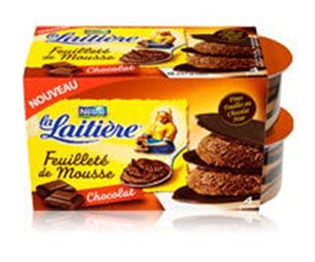

Photos 2: Nestlé product (left) and 3: Johannes Vermeer’s The Milkmaid painting (right)
The usual approach to denying trademark protection for cultural signs
If examiners do find a cultural mark unsuitable for trademark registration, they typically reject it due to lack of distinctiveness under Article 7(1)(b) EUTMR. Distinctiveness is essential for a trademark to indicate the origin of goods, and cultural signs often lack this quality, as they are seen as shared heritage rather than unique identifiers. For instance, the Mona Lisa was denied trademark registration by the German Federal Patent Court, which argued that its frequent use in advertising made it appear as a promotional tool rather than a source indicator. The court did not consider the painting’s cultural significance, despite its global renown.
The problem with relying on distinctiveness
Distinctiveness is a key criterion for trademark registration but relying on it to deny applications – at least for significant cultural works – can be seen as problematic because it does not provide a permanent exclusion, unlike Article 7(1)(f) EUTMR. Under Article 4(4) EUTMD, traders who are initially denied trademark registration due to a lack of distinctiveness can later secure protection if the sign acquires distinctiveness through use, such as commercial activities. The possibility to acquire trademark rights via first acquiring distinctiveness through use, creates a pathway for traders to gain exclusive rights over significant cultural signs by building the required level of distinctiveness over time.
This possibility incentivizes traders to heavily invest in advertising cultural works, risking the removal of culturally significant material from the public domain. Once a trademark is granted, the work leaves the public domain, potentially permanently, as trademark rights can be indefinitely renewed.
Furthermore, granting trademark rights over cultural signs poses broader issues. It risks the privatization of symbols, images, and expressions with deep cultural or historical significance, distorting their meaning as commercial interests take precedence. The exclusive nature of trademark rights can prevent communities from using these signs for cultural expression, education, or traditional practices, stifling creativity and restricting the free exchange of cultural ideas.
The Vigeland case
As mentioned in the beginning of this article, in 2017, the EFTA Court signalled a shift in the cautious approach toward public policy and morality considerations in trademark registration, particularly for cultural signs. This change emerged in the Vigeland case when the Municipality of Oslo sought to register approximately 90 trademark applications for visual works and sculptures crafted by the Norwegian sculptor Gustav Vigeland, many of which reside in the Frogner Park in Oslo – one of the most visited cultural attractions in Norway.

Photo 4: The sculptures of Gustav Vigeland.
The applications for trademark protection arose due to the expiration of copyright protection for the works. The Municipality argued that the sculptures were widely recognized and valuable thanks to the efforts and investments made by the Municipality. They also argued that the artist had specifically entrusted them with the administration and preservation of his artistic legacy. Nevertheless, the arguments proved unsuccessful, leading to the denial of registration for some of the works.
The case originated in the Norwegian Intellectual Property Office, and upon appeal, it reached the Norwegian Board of Appeal for Industrial Property Rights (KFIR). Under appeal, the KFIR referred several prejudicial questions to the EFTA Court, seeking clarification on whether an artwork destined for the public domain could be registered as a trademark. In addressing the questions, the EFTA Court introduced a new approach to denying trademark protection for culturally significant art and generally a new way of looking at cultural signs in the realm of trademark law.
The EFTA Court presented arguments for the utilization of Article 7(1)(f) EUTMR to deny the Municipality trademark rights over the culturally significant artworks. The Court broadened the application of the provision to encompass the offensive act of registration (E-5/16, Vigeland, para 92). While initially finding Vigeland’s works not inherently offensive, the EFTA Court suggested that registration of artworks considered part of a nation’s cultural heritage and value may be perceived as offensive by the public. Consequently, a refusal under Article 7(1)(f) EUTMR need not only be justified by the scandalousness of the sign itself but may also be the result of a finding that the relevant public perceives the trademark registration of the artwork to be offensive.
The Vigeland decision, an advisory opinion, empowered the KFIR to implement the EFTA Court’s reasoning. Consistent with the EFTA Court’s stance, the KFIR held that trademark registration for Vigeland’s artworks would violate public policy, as outlined in Section 15(1)(a) of the Norwegian Trade Marks Act, which implements Article 7(1)(f) EUTMR.
Benefits of the approach introduced in the Vigeland case
The Vigeland ruling highlighted numerous benefits of using Article 7(1)(f) EUTMR to deny trademark protection for cultural expressions. Key benefits include preserving public domain material, giving examiners room to consider cultural dimensions of trademark applications, balancing the copyright and trademark law interface, and promoting cultural sustainability.
Preservation of the public domain
The reliance on Article 7(1)(f) EUTMR to deny trademark rights to significant cultural signs is a welcome impulse for the preservation of the public domain. The EFTA Court found that non-distinctiveness, descriptiveness and genericness do not ensure that a particular sign is, in general, kept free for use since they can be overcome through use in trade. Article 7(1)(b)-(d) EUTMR do not therefore guarantee that the work remains within the public domain. In contrast, a refusal based on public policy or morality has a broad exclusionary effect since it cannot be overcome through use in trade, nor is it confined to specific goods or services. This ensures that culturally significant works remain in the public domain, granting the general public freedom to enjoy and use them without seeking permission from the creator and without exposure to the risk of trademark infringement.
Cultural considerations in trademark applications
Furthermore, Article 7(1)(f) EUTMR allows trademark offices and courts to investigate cultural concerns surrounding trademark applications. Having the opportunity open to potentially rely on the absolute ground of public policy and morality to deny trademark rights over a cultural work, leaves room for authorities to prevent traders from misusing cultural works for their own commercial benefit.
Balancing copyright and trademark law
The application of Article 7(1)(f) EUTMR plays a critical role in addressing the tension between copyright and trademark law. In the EU, there is currently no established mechanism for managing the overlap between these two intellectual property regimes. This has created the potential for dual protection, where a single work can be shielded by both copyright and trademark law. While copyright protection is limited to a fixed term, after which works enter the public domain, trademarks offer renewable rights that can extend indefinitely.
This dual protection poses significant challenges, particularly for culturally significant works. By prolonging protection, it risks delaying or even preventing the entry of these works into the public domain, undermining public access and hindering market competition. The EFTA Court, in the Vigeland case, highlighted this issue, emphasizing that the expiration of copyright serves principles of legal certainty and legitimate expectations by enabling others to freely use ideas and creative content after a defined period.
The use of Article 7(1)(f) EUTMR addresses this concern by providing an outright exclusion of trademark protection for works of cultural importance. This prevents traders from exploiting dual protection to restrict access to cultural expressions. In doing so, it helps recalibrate the balance between copyright and trademark law, ensuring that culturally significant works remain accessible to the public while maintaining competition.
Article 7(1)(f) EUTMR as a Tool to Promote Cultural Sustainability?
In my thesis, I argue that the absolute ground can serve as a tool to promote cultural sustainability – a concept lacking a universally established definition. One interpretation understands cultural sustainability as preserving and promoting significant cultural aspects like artistic creation or heritage (Stylianou-Lambert et al., 2015). This interpretation seems to align with using Article 7(1)(f) EUTMR to refuse trademark rights to signs of cultural importance. After all, the integrity and authenticity of Vigeland’s artworks were preserved and protected from potential commercial exploitation and misappropriation. The approach fosters the idea that cultural signs are communal assets, discouraging exclusive ownership. Keeping these works in the public domain enables accessibility for educational purposes, research, and public engagement, fostering cultural continuity. However, further study is needed to determine the role of cultural sustainability in this context.
Disadvantages of the approach introduced in the Vigeland case
Criticism related to the use of Article 7(1)(f) EUTMR to exclude cultural signs from trademark protection include (1) broadening the scope of the absolute ground beyond its original intent and (2) the limited applicability of the absolute ground.
As to the first drawback, the use of Article 7(1)(f) EUTMR in the Vigeland case has been criticized for its excessive application, raising concerns of potential overreach. The ground is typically applied to signs associated with objectionable goods or services and now it has been broadened to apply to a) the act of trademark registration itself and b) signs with a highly positive connotation that are not religious. The question is, is the absolute ground even meant to be taken this far?
The second drawback is the limited scope of the Vigeland decision, which applies only to artworks of exceptional cultural value to a nation. The EFTA Court stated that the absolute ground is reserved for rare cases where trademark law threatens ‘certain pieces of art which enjoy a particular status as a prominent part of a nation’s cultural heritage, an emblem of sovereignty or of the nation’s foundations and values’ (E-5/16, Vigeland, para 92) and poses ‘a genuine and sufficiently serious threat to a fundamental interest of society’ (E-5/16, Vigeland, para 95). The court did not have a chance to address cultural signs significant to smaller communities, such as minority groups or indigenous peoples. This leaves open the question of whether the public policy exception can protect against trademark registration of cultural signs which have a positive connotation whose registration would primarily offend minority groups and indigenous peoples, and not an entire nation.
Conclusion
The Vigeland decision marks a paradigm shift in the application of Article 7(1)(f) EUTMR, extending its reach beyond the traditional assessment of offensive marks to include the act of registering culturally significant artworks as trademarks. This novel ruling introduces a dimension to the denial of trademark protection for cultural signs that has not been imposed by any other examiner, by considering not only the scandalous nature of a sign but the potential offensiveness of registering cultural symbols. While this approach safeguards the public domain, encourages cultural analysis of trademark applications, addresses the interface of copyright and trademark law and arguably promotes cultural sustainability, it faces criticism for potential overreach and its limited scope of application. As a tool to protect cultural signs, Article 7(1)(f) EUTMR offers a unique advantage by ensuring an outright exclusion from trademark protection, preserving the accessibility and authenticity of culturally significant works for the benefit of society.
Despite soon approaching eight years since the Vigeland decision, the precise implications and impact of this case, especially within the EU, are yet to unfold. It will be intriguing to observe whether the EFTA Court will have chances to refine its stance further and if the Vigeland case will inspire parties in EU Member States to present comparable cases before the CJEU.
_________
Other photos:
2 and 3: Source (left): Nestlé / Source (right): copy of Johannes Vermeer’s The Milkmaid
4: AdobeStock/Tyler Olson
Kirjoittajat