

Online platforms and upcyling – are platforms entitled to take down upcycled products?
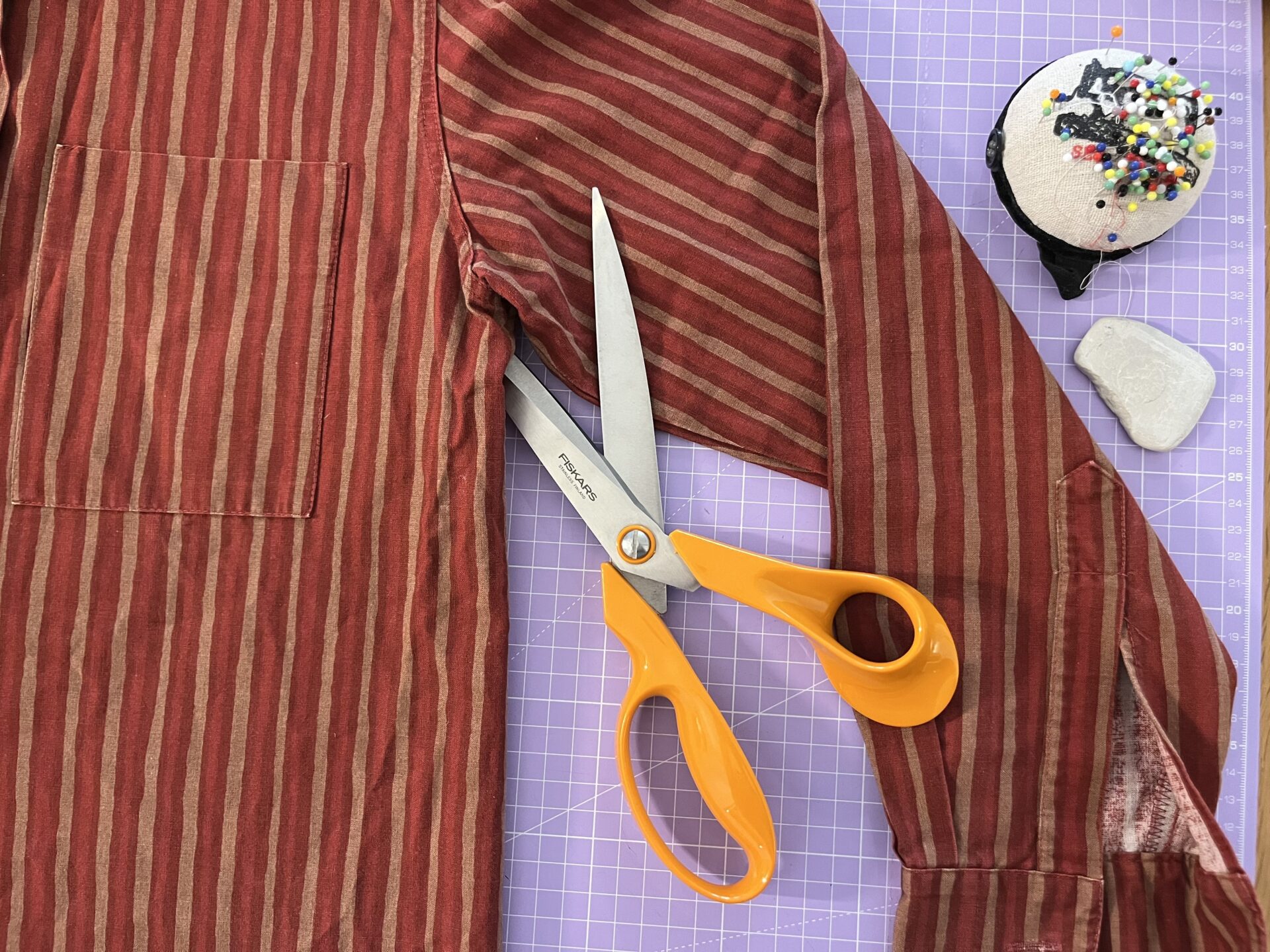
Hosting service providers must comply with the DSA’s rules, which means that rightsholders are not permitted to dictate how platforms ought to handle goods that are upcycled of their products.
In 2021, the Finnish Copyright Council (FCC) has published its statement in case TN 2021:9 Astiakorut ja tekijänoikeus (tableware jewellery). In it, the FCC found the artisan upcycling of broken porcelain tableware into jewelleries illicit. The opinion sparked an intense debate in Europe; but upcycling is neither only a European practice, nor mere artisan activity. Numerous non-profits in Asia (e.g. the Hong-Kong-based Redress), Latin-America (e.g. the Mexican Banzo), or Africa (e.g. the Ghana-based The Revival) upcycle garments (literally, waste dumped on them by the Global North). Also, upcycling often involves directly commercial repurposing of goods that can easily trigger claims of trademark or copyright infringement (see e.g. the Japanese Junkmania case, the Swiss judgment on the customization of luxury watches or a UK ruling on the refurbishment of range cookers).
In our yet drafted edited book, we argue with Heidi Härkönen that upcycling is as transformative – recontextualized or repurposed – recycling and redistribution of tangible copies of works or goods that are protected by intellectual property (IP) law. As such, it is a conflict zone of IP rights and sustainability. As both IP and the healthy environment are fundamental values (rights) of our modern society, we currently face a tough (at the same time fascinating) challenge on the method and means of balancing these interests.
And now enter the platform age. What role might e-commerce service providers play in the upcycling debate? For some (fun or strange, it is up to you) reason, it is again Finland, where such a question emerged in practice. Helsingin Sanomat reported on September 11, 2024 that Tori.fi has removed an offer for the sale of a single clothes upcycling from Marimekko’s decades-old vintage curtain. The position of the seller – arguably listing such products not for the first time on online marketplaces – and Marimekko cannot be farer: the latter argues that its IP policy prohibits any use that surpasses private, non-commercial uses; while the seller disagrees with such a rigid interpretation of the law. Others – including me and Heidi Härkönen – argue that any such reuse of lawfully acquired copies of copyrighted materials shall be covered by the doctrine of exhaustion (see also a follow-up interview with Heidi Härkönen by the Helsingin Sanomat). This doctrinal debate is far from being settled, and the present post is not willing to judge the issue either.
Indeed, we shall focus on the third party’s role in our short analysis. Tori.fi is a second-hand e-commerce service provider (an online marketplace), and, as such, it is subject to the European Union’s rules on information society service providers. Historically, the Directive 2000/31 (the E-Commerce Directive) and its Finnish transposition law, Act 917/2014 on Electronic Communications Services, covered service providers’ safe harbours. Recently, with an effect of January 1, 2024, these were replaced by the provisions of Regulation 2022/2065 (the Digital Services Act or DSA) on online platforms. The DSA shall apply to the upcycling issue at hand. Tori.fi, as a hosting online platform, shall balance the interests of the different stakeholders. Under Article 6(1)(a)-(b) DSA, it might only be exempted from liability, as long as it
does not have actual knowledge of illegal activity or illegal content and, as regards claims for damages, is not aware of facts or circumstances from which the illegal activity or illegal content is apparent; or upon obtaining such knowledge or awareness, acts expeditiously to remove or to disable access to the illegal content.
The Helsingin Sanomat report noted that Marimekko provided a ‘guidance’ to Tori.fi on the handling of (allegedly) illicit offers on the second-hand e-marketplace. Without the knowledge of the details of any such ‘guidance’, there seems to be concerns as regards to prima facie compliance of such document with the DSA’s ‘actual knowledge or awareness’ requirement. Even more, Article 16 DSA discusses in detail how the newly regulated ‘notice and action’ mechanism shall function. As a part of that, individuals or entities that allege the hosting of any unlawful contents by the online platforms shall substantiate their claims and provide actual, detailed information on every single infringement on a case-by-case basis. Finally, Article 20 DSA shall guarantee recipients of the service of online platforms to rely on an internal complaint-handling system to, inter alia, dispute the removal and disabling of their contents from the platforms’ system.
The functioning of this complex system is of great importance for the future of e-commerce. No doubt that these rules are of vital importance for the protection of the intellectual property rights. Upcycling is, however, not self-evidently illegal. Against what Marimekko claims, the transformative resale of goods might be fully in line with existing copyright and trademark laws. The doctrine of exhaustion can easily cover the recombined and repurposed uses of copyright materials, as long as the access to the source materials was lawful (lawfully purchased or otherwise, e.g. through gift or inheritance, acquired), and the use of works does not reach the level of adaptation or infringe moral rights of authors. In trademark law, the use of the exhaustion doctrine might be subject to some limitations. Where the condition of the involved goods is changed or impaired, the trademark holder might have legitimate reason to oppose any further resales. (And indeed, any such claims might be present only if the involved good is protected by trademark law; unlike Marimekko’s design involved in the case.) Such a reason might be present only if the reputation of the trademark holder is seriously damaged or where an average consumer would believe the presence of any commercial connection or affiliation between the trademark holder and the upcycler.
It is a question of fact whether an offer of a single, seamstress-made (not industrially-manufactured nor mass-produced) and explicitly upcycling-tagged product could lead to any such damage or belief. No doubt, this might only be judged by the courts and not by online platforms. Hosting service providers are, however, obliged to comply with the DSA’s rules, hence any initial removal of an individual offer might be acceptable only upon the receipt of individual, substantiated notices; whereas the internal complaint-handling system shall be guaranteed, too. Based on the information available to this author, Marimekko’s ‘guidance’ does not seem to meet the ‘sufficiently substantiated explanation’ prong of the DSA as to the illegality of an individual use. Also, in the lack of any such substantiation, the Tori.fi’s removal of the offer upon the mere allegation (via Marimekko’s ‘guidance’) does not seem to comply with the provisions of Article 16(6) DSA on ‘diligent, non-arbitrary and objective manner’.
To make things simpler, hosting service providers, upon consultation with lawyers, might pro-actively draft their internal ‘upcycling policy’ to literate their clients and the public on the circumstances when the resale of upcycled third party materials might trigger a notice and to ease the handling of the complaints. Also, recipients of the service of online platforms might need to be aware that they have a half year to submit their complaint against decisions of online platforms like the one at hand.
The author is grateful for Heidi Härkönen’s and Samuli Melart’s comments on the manuscript of this post.