

Intellectual Property for Upcycled Fashion – Perspectives from Asia
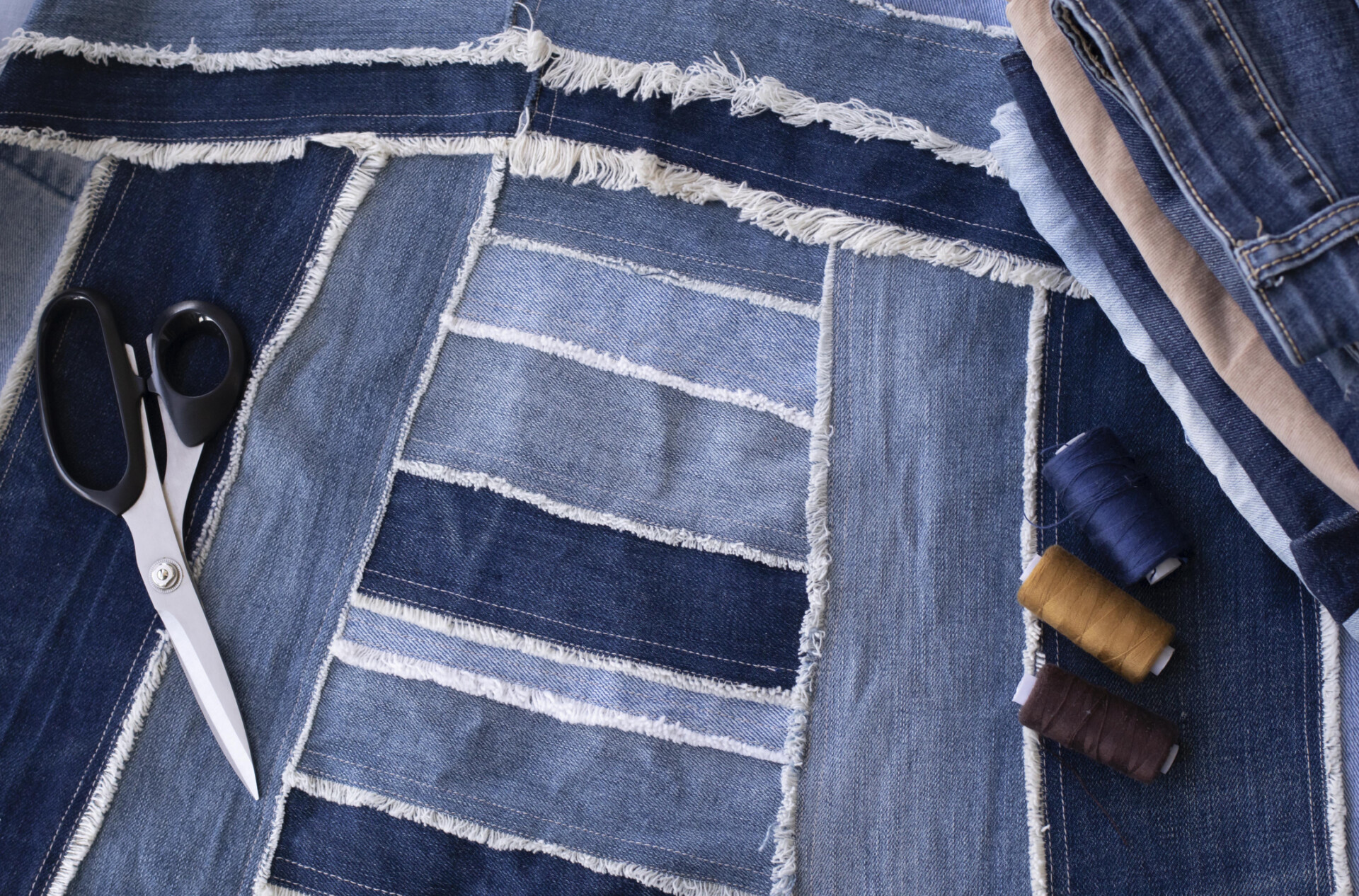
This article provides an Asian perspective to one of the hottest topics of IP at the moment: upcycling.
Upcycled fashion – a term that has recently been introduced to consumers in Asia – is actually an age-old practice. Whether it is transforming an old silk saree into a dress in India (Yammiyavar, 2019) or repurposing a worn kimono to a pouch in Japan – these happen to be the traditional sustainable practices to preserve generational identity (Mckinney, 2025).
In fact, the perception towards upcycled fashion in most of these countries is based on reflecting the cultural heritage values, for example, the traditions of mending and repurposing leftover textiles to create garments across generations. Upcycled fashion in Asia caters to traditional and regenerative practices to achieve sustainability. Several independent brands have collaborated with local artisans, craftspeople, farmers, and handicraft workers to revamp traditional upcycling techniques applicable to the textile and apparel industry. The objective is to infuse the age-old garment and apparel-making processes with modern-day weaving techniques. Regenerative fashion farming, modular and biomimetic fashion are revolutionising the concept of upcycled fashion by engaging in collective ownership with indigenous communities (see more on, Natori and Sethi, 2023; Chen and Li, 2018; Anzabi, 2016; Santen, 2023). For example, Doodlage, India (see official website) employs skilled artisans and weavers to transform discarded wool, cotton, silk, and other waste materials into high-quality sustainable garments. Heritage Re-fashioned, Hong Kong (see, official website) offers handbags and accessories made from upcycled vintage textiles. Amaud, Japan (see, official website) is a sustainable luxury brand that repurposes old kimonos into new ready-to-wear garments. Restore, Singapore (see, official website) turns discarded textiles into well-designed accessories and handbags. SukkhaCitta, Indonesia (see, official website) draws on cotton farmers’ traditional regenerative farming knowledge, combining heritage craftsmanship and contemporary silhouette while realising the idea of farm-to-closet. Additionally, AF aka Afsana Firdousi, Bangladesh (The Business Standard, 2025), CDK Fashion House, Bhutan (see, official website), and Matter Prints and Artisan and Fox from Singapore (see their official pages here and here), AltMat, Christy Dawn and Raydan in India (see more here; here and here), UseDem by Common Objective in China (see official website) and Reina Ibuka in Japan (see here) are other such SME’s engaged in promoting sustainable and upcycled fashion.
IP and Upcycled Fashion – the issue of infringement
In Asia, fashion designs can be registered either as copyrighted artistic works, as industrial designs for finished garments, or as combinations of works of applied art to be used as designs. In countries like India, China, Singapore, Japan, Indonesia, and Vietnam, copyright for artistic work provides protection for works exhibiting artistic craftsmanship or works of art (for more on this, Section 2(c)(iii), Copyright Act, 1957; Article 3(4) of Copyright Law of the People’s Republic of China 2020; Subdivision (5)(20)(1)(a)(iii) Copyright Act of 2021 Singapore; Article 2(2) Copyright Act of Japan; Article 40(1)(g) Law of the Republic of Indonesia; Article 14(1)(g) Vietnam Intellectual Property Law – No. 50/2005/QH11). In this way, one can seek protection for design artworks, sketches, drawings for fashion apparel etc., under the category of artistic works, and works of art applied to fabric or garment under the category of works of artistic craftsmanship. Furthermore, India and Singapore allow articles of clothing, accessories, jewellery, and bags to be protected under their industrial design laws (see, Section 2(d) Industrial Design Act, 2000; Registered Designs Act, 2000). However, functional designs are not registrable. In fact, there is a prohibition against any concurrent protection under copyright and industrial design law across all of these jurisdictions. For example, China follows the design patent model (see, Article 2 Patent Law of the People’s Republic of China). The overall shape of a product, or its part, pattern, colour, use, or any combination thereof, fit for industrial application and aesthetically appealing, is a patentable subject matter under design patents. In addition, techniques used in producing fashion items, as well as the production processes themselves, are patentable as inventions (typically under utility patents).
Such a comprehensive legal framework grants fashion brands in Asia the right to protect their designs under IP and initiate legal action against counterfeits, imitations, unauthorised customisations, and knockoffs. IP for sustainably curated fashion raises the question of potential infringements, especially under trademark law. For example, fashion upcycling, as a sustainable practice, involves reusing IP-protected goods and reselling them in the secondary market. Here, an IP infringement issue arises due to the resale of the repurposed or otherwise embellished product, adding value to the original product, with the upcycler benefiting from its improved appeal. Specifically, in cases when there is a re-application of cutouts of logos or trademarks from the garments belonging to popular brands, the resulting ‘embellished’ upcycled item may be suspected as an unfair trade practice and hence infringing (Keats, 2020).
Endorsing Upcycled Fashion by IP – can it be an exception?
If upcycled fashion is the answer to mitigating environmental impacts from the textile and fashion industry, IP law might have to accommodate sustainable fashion, specifically by extending the existing limitations and exceptions under IP to upcycled fashion. At the moment, there are no definitive statutes or court rulings specifically addressing upcycled fashion’s relationship to IP in Asia. However, a few recent court decisions in Asian countries regarding customisation and ‘mock’ fashion have helped clarify how fashion upcycling is viewed in terms of IP infringement. Hence, fashion upcycling can be examined in light of certain established exceptions, namely – the first-sale (exhaustion) doctrine, the right to repair, and the transformative use doctrine.
Under the first-sale (exhaustion) doctrine, an IP holder cannot assert infringement in relation to the distribution or resale of goods already circulated lawfully in the market. Upcycled fashion may be considered non-infringing under trademark laws by drawing an analogy to the principle of transformative redistribution, as recognised in copyright law. (Mezei and Härkönen, 2023). The courts in India have ruled against trademark infringement in the case of distribution by way of customisation of fashion goods when there is no misrepresentation or actual confusion as to the identification of the source of such fashion goods (read judgements here, here and here). However, in a similar case of LV v. Junkmania, the Intellectual Property High Court in Japan ruled that despite Junkmania labelling the customised LV products as remakes to avoid any consumer confusion or misrepresentation, an unauthorised commercial use of designs of a famous brand is a case of unfair competition. Following the same logic, LV also sued a handbag craftsman in South Korea for refurbishing its bags without permission. The Korean Patent Court, however, ruled that this activity constituted trademark infringement, as it went beyond the scope of repair and constituted an act of production, and consumers could still get confused if the refurbished products are viewed by or transferred to a third party. Their ruling clarifies that if the customisation on sale results in new products, then it has “infringed on the market control and quality assurance functions of the registered trademark, which did not meet the conditions for the application of the principle (of exhaustion).” In addition, Chinese court decisions involving the removal of original trademarks or the addition of new features to second-hand products indicate that the doctrine of exhaustion is generally not applied when “substantial changes” are made to the original product for commercial purposes. Hence, if the modifications serve the purpose of upcycling and do not cause consumer confusion, they do not qualify as trademark infringement in India and Japan. But it will be deemed infringing in Korea and may even receive criminal sanctions in China if consumer confusion can be identified (see Shanghai Changning District People’s Procuratorate v. Xi et al., 2024). Likewise, under Asian copyright laws, the principle of exhaustion nullifies infringement claims when the right of reproduction does not involve physical duplication. Unless the dealing of the copyrighted work amounts to a derogation that triggers the moral right of integrity, the sale and distribution of works of applied art already in circulation are not considered an infringement (Härkönen, 2025; Section 2(m), Indian Copyright Act, 1957).
Furthermore, the principles underlying the right to repair for the automotive and spare parts industry may be extended to the case of fashion upcycling. Since the right to repair and fashion upcycling both aim to extend product lifespans and promote sustainability, an analogy can be drawn in how they interact with IP law. While the right to repair focuses on minimising e-waste by allowing it to be repaired by an external agency, fashion upcycling seeks to extend the usable life of fashion items by adding or modifying their original look. Offering independent repair services might otherwise be seen as trademark infringement if, in the course of business, using the mark implies a connection between the original brand’s goods and the repair service. Such an implied connection is especially likely if the independent repairer also manufactures or supplies replacement parts for the original product (Arora, 2021). However, viewed through the lens of the first sale (exhaustion) doctrine, these repair activities would not constitute infringement as well. This is because the goods would be considered to have been acquired lawfully from the market. In this case, if the independent repairer offers for sale or otherwise deals with such goods, it is not infringement – unless those dealings impair or alter the original condition of the goods (see, Kapil Wadhwa v Samsung Electronics, 2013 (53) PTC 112 (Del.) (DB)). Such ‘otherwise dealings’ in the goods are contrary to the term ‘exclusive use’ and include a ‘resale’. Additionally, a “resale after constructive modifications only to make it work provisionally”, without having to replace the original product with an unauthorised reproduction, cannot be regarded as an infringement. This is because the first-sale (exhaustion) principle is applicable to the goods already in circulation. Fashion upcycling could similarly be viewed as an extension of consumer rights, allowing individuals to choose upcycled goods over unnecessarily discarding them.
In addition to this, the transformative use doctrine from copyright law’s fair use or fair dealing principles (used synonymously to fair use in India, the UK and Canada) could be applied by analogy to trademarks in the context of upcycled fashion goods. Transformative use is applied to cases where a new expression, meaning, or message is added to the original work. In other words, the more transformative the new work is, the less significant the other four fair use factors would become, including commercialisation and market substitutability (for more, read here). In Asian jurisdictions that have introduced the concept of transformative use in deciding copyright cases, upcycling cases that are transformative enough may be exempted. It is perhaps unsurprising that an analogous ‘transformative re-use’ concept in trademark law can be convincingly applied to upcycled fashion as well (Mezei, 2024). Applying a transformative use principle would effectively negate infringement claims by reason of the fundamentally altered nature of the upcycled product (see here). However, this principle would only apply if the transformation neither misrepresents nor confuses consumers about the identification of the source or origin of the original product (Calboli, 2024). Moreover, ‘transformative use’ often implicates fundamental interests like freedom of speech and access to information (for example, in parody or criticism), and similar considerations arise in trademark law (Shaughnessy, 1986; Senftleben, 2024).
Applying these IP exceptions by analogy for upcycled fashion would clarify its legal status as non-infringing to the rights of the IP owner. In order to advance sustainable living objectives and endorse upcycled fashion by IP, the existing flexibilities should be used to make IP-protected goods more accessible.
IP and Upcycled Fashion – the road ahead!
Achieving a full transition from a linear to a circular economy will require governments and policymakers to incentivise businesses that adopt sustainable fashion models. Brands could, for example, launch limited-edition collections of upcycled garments by entering into shared licensing agreements and disclosing sewing patterns or designs to independent brands or entities already engaged in upcycled fashion (for more, see Härkönen, 2018). For example, Patagonia ReCrafted, an iconic outdoor clothing brand, launched its Worn Wear take-back program in 2019, where it collected pre-owned gear and clothing from customers and re-crafted those items into unique pieces for reuse. Customers were incentivised to trade in their old Patagonia items by receiving store credit, the amount of which was based on the condition of the returned item (Patagonia, 2018). Voluntarily sharing revenue and trademark rights through licensing agreements between fashion houses and upcycling brands may help avoid infringement disputes. In 2014, the brand Re/Done pioneered the upcycling of vintage Levi’s jeans into modern fits – essentially breathing new style into pre-loved denim. This process extended the life of items that would otherwise sit as dead stock or end up in landfills. Since then, Re/Done has become a well-known upcycled fashion brand and has collaborated with American companies like Dr. Scholl’s, Hanes, and even Ford (see e.g., their website). Furthermore, brands can collaborate with retail organisations or institutions to upcycle unsold or unwearable donated garments, thus bringing circularity into the fashion supply chain. Project Revibe and The Godadi Project, an initiative of India Recycle, are examples of this. These projects operate on a model of collecting and selling pre-owned high-end items, primarily across slum areas. The revenue generated is distributed equally among the women who work for women-led enterprises in the slums producing Revibe and Godadi products (see e.g., their website).
As a last resort, government organs, judiciaries, and even procuratorates could issue guidance documents that include detailed instructions on IP compliance. For example, in April 2022, the Shenzhen People’s Procuratorate issued China’s first criminal compliance guidelines for IP rights in the electronic product refurbishment industry (the Guideline). The Guideline clarifies the general principles of IPR criminal compliance in the electronic product refurbishment industry and puts forward fifteen requirements for guiding the industry to take the initiative to fully disclose information and prominently mark the ‘refurbished’ logo (see more on Criminal Compliance Guidelines on Intellectual Property Rights for the Electronics Refurbishment Industry (Trial), People’s Procuratorate of Shenzhen, Guangdong Province). The necessary guidance includes the requirement of voluntary information disclosure, prominent labelling of the refurbished mark, only applicable to certain types of repair (polishing and general repairs), use only reliable spare parts, and provision of a limited warranty. The recommended guidance requirements include strict control over product quality, proper regulation on sales of refurbished products, removal of data and information on second-hand products, and making clear platform obligations and liabilities. The prohibited guidance requirements include: no use of misleading terminology and labels; components used in refurbishment must not be counterfeit or infringing components; external packaging and accompanying products must not infringe IP rights; the reconstruction of electronic products is prohibited; any form of refurbishment must not involve the removal, modification, or renewal of trademark identifiers; it is prohibited to destroy software protection measures of electronic products through firmware flashing or other means. Overall, the Guideline provide a useful model for regulating market behaviour and improving legal compliance. Aside from the strictly tech-related points (like software protection circumvention or data removal), all of the other requirements could be readily applied to fashion upcycling.
Hence, just as in the case of e-waste repairs, certified fashion upcyclers should be granted the right to modify fashion items to ensure they can be reused instead of being discarded. IP rights-holders could grant such permission to any interested upcycler, thereby exempting them from potential patent, design, or trademark infringement claims. Accordingly, upcyclers could be required to include a disclosure as a nominative use, clarifying that the upcycled product was made by them with no affiliation to the original brand (read more here). Such a disclaimer would make it easier to treat the upcycling as an exception under IP law (Keshari and Thakur, 2024). Accordingly, clearer regulations – perhaps including a certification process (as in the Upmade model) or even a simple “(U)” mark to denote upcycled products – could help curb the IP abuse and pre-empt infringement claims (See more here).
Conclusion
The growing attention towards sustainability with a focus on fashion upcycling in the Asian textile and apparel industry is remarkable. IP law must evolve to integrate fashion upcycling into its framework. Once a fashion item protected by IP is sold, the IP rights in that item should, in general, be exhausted – an upcycler should then have the right to modify it. If the modifications significantly alter the item’s original appearance, it will be a prima facie infringement. Nevertheless, the upcycler’s actions can be viewed as transformative under the fair use doctrine. Additionally, fashion upcycling can be seen as a form of repair, extending a product’s life by refreshing its appearance for continued use. In this regard, the rise of small independent upcycling labels and their collaborations with community craftspeople are significant developments. Moreover, sustainable and upcycled fashion businesses in Asia are evolving by incorporating regenerative, modular, and biomimetic fashion trends. Fashion upcycling still has a long way to go before it can achieve results significant enough to help reverse the environmental damage. Aligning fashion upcycling harmoniously with IP could be a step toward adopting a true circular economy model.
____________________
Main photo: iStock/Elena Belykh
Kirjoittajat