

Fashion, Sustainability and Intellectual Property – Protection as a Double-Edged Sword
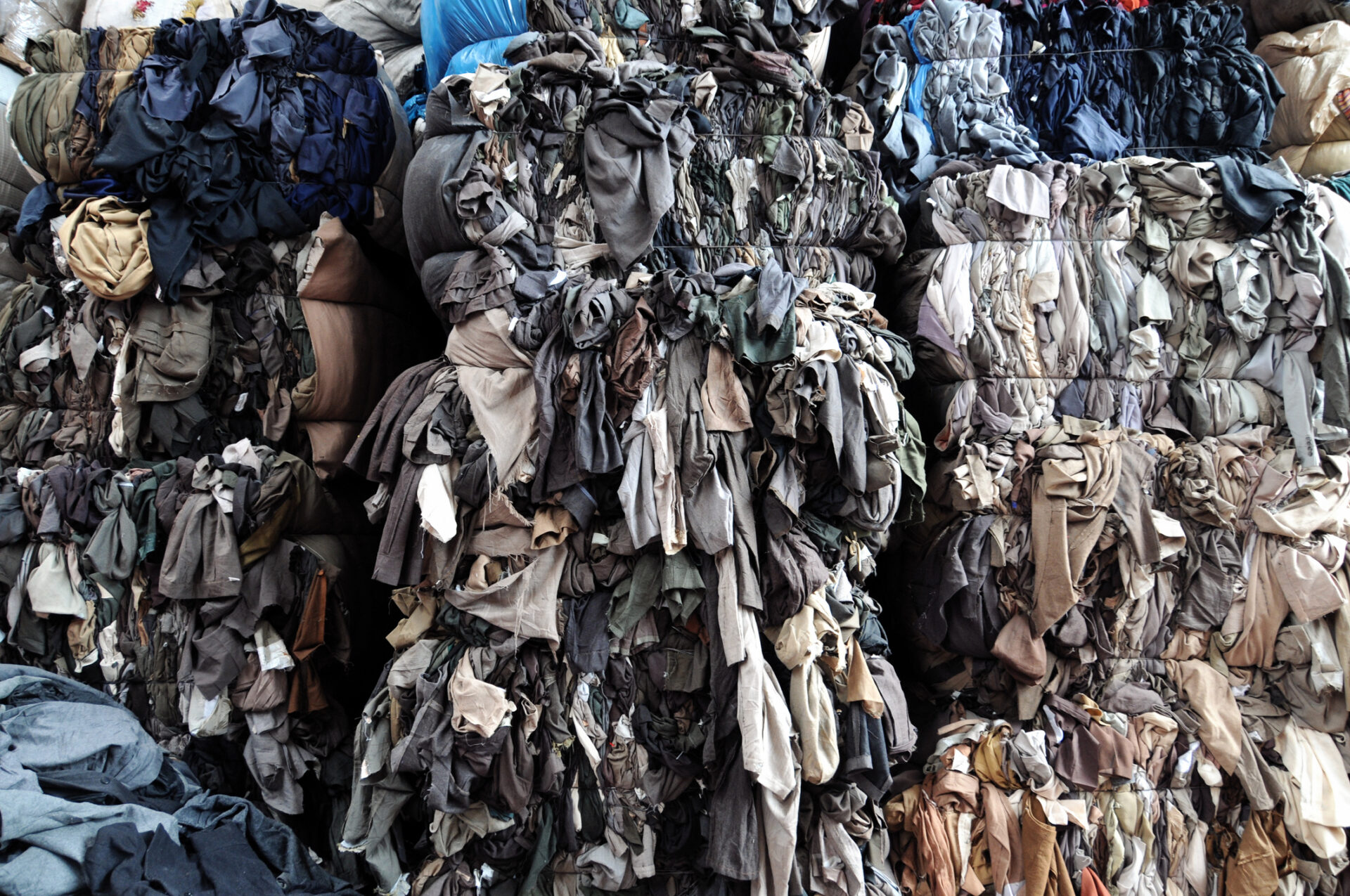
IP law has a role to play in pushing the fashion industry towards a better future, but protection can both help and hinder sustainable development. It is therefore important to strike a balance between IP protection and unauthorised free use of fashion products.
The apparel and textile sector is one of the world’s most polluting industries. The number of fashion products produced and consumed has increased dramatically in the 21st century. Due to the overproduction and overconsumption of fashion goods, this industry is estimated to be responsible for approximately 10% of annual global carbon emissions (Ellen MacArthur Foundation 2017; United Nations 2018). There is an undeniable need for legal action to achieve sustainability transitions in the fashion sector.
One piece of this ’legal puzzle’ is intellectual property law. Unfortunately, IP law has not kept pace with societal changes in the fashion sector, such as the rise of fast fashion (from ’normalised’ fast fashion brands like H&M and Zara, to largely frowned upon but still popular fashion villains like Temu and Shein) and the growing interest in circular fashion business models like upcycling.
The way we develop and interpret intellectual property law has an important role to play in the fashion sector’s transition to sustainability for two reasons related to the level and scope of protection:
- First, intellectual property laws in many jurisdictions have inadequately protected fashion creations, making them vulnerable to unsustainable fast fashion imitations (Härkönen 2021). This is particularly the case in jurisdictions such as the United States, which do not generally grant copyright (or design) protection to utilitarian articles (for more on this, see Buccafusco & Fromer 2017).
- Secondly, those parts of fashion goods that have been more easily protected – such as fabric prints and logos – appear to be over-protected in the sense that rightsholders have been able to object to the circular, sustainable reuse of their products, such as upcycling (although especially in copyright cases, these rights holders’ arguments have been less than convincing – see Mezei & Härkönen 2023).
The impact of IP law on the sustainable development of fashion is a double-edged sword: we should neither want to under-protect nor over-protect fashion.
Strong protection is poison for fast fashion
Intellectual property rights have great potential to steer the fashion sector towards circularity and sustainability. For example, fashion companies can use IP rights to protect sustainable innovations and obtain patents for eco-friendly textiles. Trademarks, on the other hand, can be used to signal sustainable practices (Calboli and Corrado 2025, 90). And when it comes to copyright and design protection, I have argued in my doctoral thesis that these exclusive rights to fashion designs can promote sustainable development in the sector by discouraging the phenomenon of fast fashion for the following reasons (Härkönen 2021).
The fashion sector relies on the creativity and successful branding of innovative fashion companies. In fast fashion, however, creativity is minimal or non-existent. Instead of being original creations, fast fashion garments are mostly low-quality imitations and knock-offs of original fashion designs, or mundane garments that do not attract any form of intellectual property protection (Härkönen 2018, 919). Therefore, fast fashion products tend to lack the qualities that IP protection is intended to protect.
However, fast fashion and ’true fashion’ should not be confused in IP discussions. Fast fashion is about speed, disposability and imitation, whereas creativity and cultural significance are at the heart of true fashion – and this is what copyright is intended for (see more: Härkönen 2021, 17–21). However, the copyright laws of different jurisdictions have treated fashion designs with great caution (Härkönen 2018; Härkönen 2021, 52–74). As I have argued in my doctoral thesis (Härkönen 2021), the fast fashion business model has been able to develop because the IP system has not sufficiently protected original fashion designs. Strong protection of original fashion creativity reduces unsustainable production and consumption by hampering the fast fashion industry. Therefore, the sustainable development of the global fashion sector requires that fashion designs – and not just the logos attached to them – are considered protectable subject matter (provided that they are either original, or new and have individual character).
Of course, for such protection to be effective, rightsholders need to be able to enforce their rights against fast fashion companies. However, enforcement may not always be feasible. Given that even the collections of luxury fashion houses change so quickly these days (Calboli & Corrado 2025, 92, 94), and considering the time and money involved in enforcement, it may not always be considered worth the effort. (On the other hand, if a company is producing designs that are destined to have such a short market life that the designs are not worth defending against fast fashion competitors, then that company should do some serious self-reflection and consider whether its own business models are all that sustainable).
Notwithstanding the above, even if rightholders choose not to enforce their rights against fast fashion companies, the existence of clear IP rights over fashion creations could still reduce the willingness of fast fashion companies to plagiarise these protected designs. All in all, the difficulties associated with enforcement serve as a reminder that IP laws are certainly not the only laws needed to reduce the various environmental, social and cultural harms of the fast fashion sector.
Overprotection of fashion is detrimental to the circular economy
Although IP protection of fashion products has the potential to hinder the fast fashion phenomenon, we should also pay attention to the scope and extent of protection provided by different IP rights. If the scope of protection of utilitarian articles is too broad, this also hinders the circular economy (i.e. an economy that is restorative and regenerative by design) by preventing the sustainable reuse of fashion products, such as upcycling (Mezei & Härkönen 2023; Calboli & Corrado 2025, 93. See also Ballardini & Pihlajarinne 2020 and Izyumenko 2024).
From an IP perspective, upcycling can be defined as the transformative – recontextualised or repurposed – recycling and redistribution of tangible copies of works or goods protected by some form of IP rights (Mezei & Härkönen, forthcoming 2025). Upcycling is becoming the next area of conflict between IP rights holders and sustainability-oriented producers over the reuse of used consumables, as IP rights and the circular economy are often in conflict by relying on the same resources with significantly different logics and policies (ibid.). The IP system appears to favour strong protection at the expense of circularity (see e.g., Preamble to Directive 2001/29/EC of the European Parliament and of the Council of 22 May 2001 on the harmonisation of certain aspects of copyright and related rights in the information society (InfoSoc Directive), recitals 4, 9; Beldiman et al. 2024). This reflects the IP system’s ‘strong property rights bias’ (Ballardini & Pihlajarinne 2020), which ignores the circular potential of many old, broken or discarded IP-protected goods.
Many fashion rightsholders are guilty of hindering circularity by objecting to the upcycling of their products (Calboli & Corrado 2025, 94). For example, the iconic Finnish design house Marimekko had Tori.fi, a second-hand e-commerce site, to take down a post where a private individual was trying to sell her old dress. The dress was upcycled from Marimekko’s vintage curtain (Löytömäki 2024; Mezei 2024). Also, Fiskars Group successfully objected to an upcycling artist’s wish to sell jewellery made from broken Arabia cups and plates (Finnish copyright council statement TN 2021:9 tableware jewellery; Mezei & Härkönen 2023). Both companies based their claims on intellectual property laws. Such anti-circular interpretations of IP law have been criticised by, among others, Péter Mezei and myself (Mezei & Härkönen 2023; Mezei 2024), Maria Rehbinder (Rehbinder 2024, 1214-1215; dissenting opinion left in TN 2021:9 tableware jewellery) and several scholars in the forthcoming edited volume Research Handbook on Intellectual Property and Upcycling (Cambridge University Press, edited by Péter Mezei and myself).
The ’curtain dress case’ also caused outrage in the Finnish design community, as seen in the social media posts of the ’Diet Prada of Finland’, @vaindesignjutut Instagram community (see e.g., their feed on 11 September 2024). In addition, well-known sustainable fashion influencers such as Jenni Rotonen and Outi Pyy criticised Marimekko’s anti-upcycling policy on their social media channels.
The rightholders’ interpretation of the scope of copyright protection in the cases described above can be questioned. As I have argued with Professor Mezei, the upcycling of copyright protected utilitarian articles fits doctrinally within the concept of exhaustion and, more importantly, is supported by sound policy arguments based on the primary sources of EU law and the general goals of sustainability and circularity (see full analysis: Mezei & Härkönen 2023). In the area of trademark law, however, fashion re-users are in a worse position: upcycling may very well constitute trademark infringement in the current legal environment (see Calboli and Corrado 2025; Sentfleben 2025). The arguments of rightsholders against unauthorised re-use of their trademarked products are therefore more convincing than in the area of copyright.
However, at the moment it does not even matter so much whether the rightsholders are legally right or not – even weak legal claims presented by corporate lawyers may well be enough to intimidate upcyclers, who tend to be artisans or micro-enterprises without similar legal resources. It is understandable that they are not willing to argue with corporate lawyers. But as long as there is uncertainty about whether upcycling falls within the scope of the exhaustion rules and/or various exceptions to intellectual property rights, we are in a situation where large rightsholders can exploit their position to the detriment of the circular economy.
It is clear that the negative attitude of rightsholders towards upcycling hinders the development of green and circular business models such as upcycling. There is therefore an urgent need for the IP system to accommodate circular fashion trends based on the reuse of existing products. As IP is a double-edged sword, it is necessary to strike a balance between access to protection for fashion goods and their scope of protection.
Striking a fair balance
The IP regime surrounding the fashion sector must be interpreted – or (re)constructed – in a way that strikes a fair balance between protecting innovative, original fashion creations and ensuring the ability to recycle, reuse and upcycle those protected items. We should avoid both under- and over-protection.
As far as underprotection is concerned, at least the EU copyright regime now seems to be moving towards a unity of art approach as a result of the case law of the European Court of Justice (CJEU) (see Härkönen 2021, 52–74). However, Member States seem to have significant problems in applying the guidance coming from the CJEU (Derclaye 2022). In addition to copyright, designers and companies operating in the EU can benefit from design protection, which is generally accepted as a viable form of protection for fashion products. But in order for fashion creators to be able to properly rely on these rights, lawyers and judges need to have a better understanding of the creative processes involved in fashion design. It is a common mistake for lawyers to think that fashion design is mainly functional, imitative or trend-following, rather than free and creative. Such misunderstandings can put a lot of fashion creations into the public domain that should not be there (Härkönen 2025a).
At the same time, it is clear that fashion products should not be over-protected. Overprotection is a serious threat to sustainable development, as it hinders green and circular business models, such as upcycling. The public interest in minimising fashion waste and moving towards a circular economy must take precedence over the interests of IP rightsholders. Similar arguments have been made by, for example, Martin Sentfleben (2025), Irene Calboli and Margherita Corrado (2025) and Rosa Ballardini and Taina Pihlajarinne (2020). The debate in the design community also shows that creators themselves find restrictions on upcycling obscene. It seems that it is the rightsholders – such as fashion companies – and not the designers who are against the circular use of fashion products (Härkönen 2025b, forthcoming).
Therefore, in addition to protecting fashion products from fast fashion copying, we also need to protect upcyclers, recyclers, refurbishers and other fashion reusers from aggressive rightsholders who favour strong exclusive rights over various sustainability objectives. Striking a fair balance may require not only a sustainable (re)interpretation of existing IP laws (as suggested by e.g. Sentfleben 2025, Calboli and Corrado 2025, and Mezei & Härkönen 2023), but also a redesign and renewal of the law. Sustainable (re)interpretation may be easier in the area of copyright, while trademark laws may need to be explicitly amended.
Concluding remarks
In order to achieve the objectives of the EU Strategy for Sustainable and Circular Textiles (2022), we need to pay attention to the role of IP protection as a double-edged sword in the fashion sector’s sustainability transition. This strategy addresses the need to build a resilient textile ecosystem based on innovation and global competitiveness.
While there are a growing number of sustainability-minded fashion brands, as a society we are still in a situation where there is simply too much fashion being produced and consumed. It is therefore essential to consider various legislative means to force the entire fashion sector towards sustainability and circularity (at this point, no one in their right mind would claim that voluntary means, consumer demand and/or soft law will do the trick). One piece of this puzzle is intellectual property law – but only one.
_________________________