

Book launch: Fairness in Intellectual Property Law – reflections from the audience

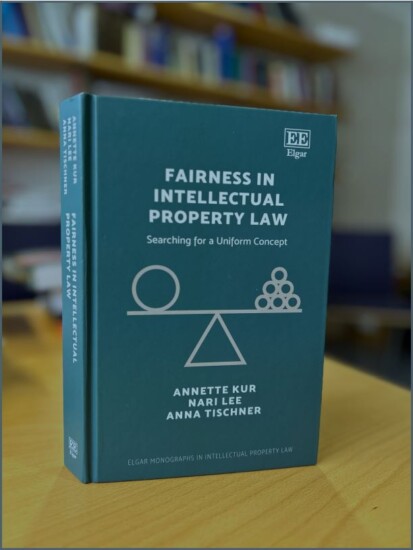
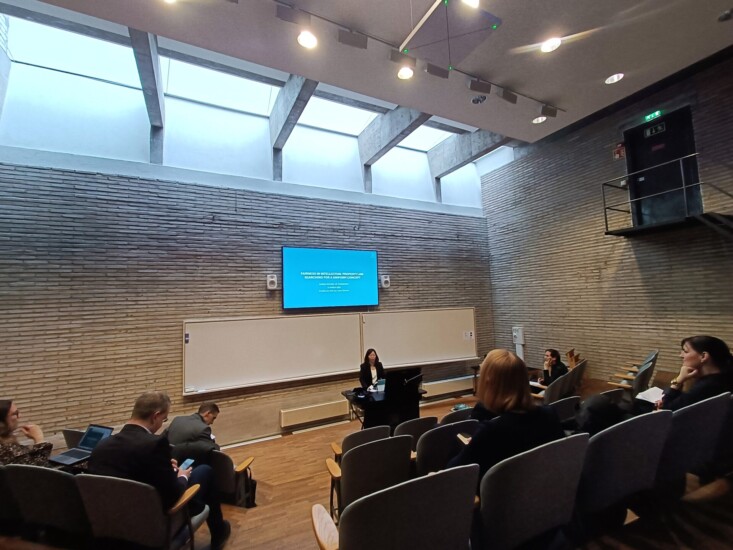
On 12. March, IPR University Center together with Hanken held a book launch event for ‘Fairness in Intellectual Property Law’, authored by by Professor Annette Kur, Professor Nari Lee and Professor Anna Tischner. The book, which was published by Edward Elgar in 2024, is Open Access and available in Elgaronline for everyone. At the book launch event we had the opportunity to hear a discussion and introduction on selected chapters from the authors. In addition, the seminar contained prepared comments and a general discussion on the topic.
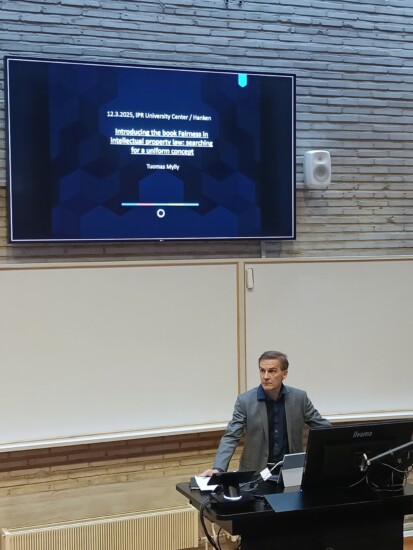
 The event began with an introduction by Tuomas Mylly, professor of commercial law at the University of Turku and Director of IPR University Center. Prepared comments on the book were prepared by professor (emeritus) Niklas Bruun and Dr. Daniel Jongsma from the department of Commercial Law at Hanken.
According to the commentators, the book was a testament to the excellent collaboration between the authors. It was often mentioned throughout the event, how each chapter was the result of collective brainstorming. The authors shared ideas, themes and concepts remained through all chapters.
The author’s introduction on fairness and intellectual property
Prof. Anette Kur spoke first about fairness, IP and fundamental rights, which are specifically addressed in Chapter 5 of the book. Kur is an Affiliated Research Fellow in intellectual property and competition law at the Max Planck Institute (MPI) in Munich. She is also an honorary professor at the University of Munich (LMU), and she holds honorary doctor degrees from the University of Stockholm and the Hanken School of Economics in Helsinki.
During her speech, Kur explained that the book aims to bring together a loosely defined concept of fairness and emphasized that as the legal environment changes, IP law must adapt accordingly. According to Kur, there are two approaches to restructuring IP law: a utilitarian approach and a fundamental rights-based approach. Both have their downsides, for example a utilitarian approach may over-emphasize provable efficiency, and fundamental rights approaches may be used in an inflationary manner. The book suggests that fairness should be seen as a middle route between these approaches.
The rule of law means legislative decisions made in a democratic process should not easily be set aside whenever another rule might appear more ‘satisfactory’
– Anette Kur
Kur added that a fundamental rights approach is not a one for all solutions because it doesn’t lead to clear cut results and legislative decisions made in a democratic process should not be easily set aside. She emphasizes that fundamental rights and fairness should not be used as arguments to erode division of powers and through that rule of law. Instead, fundamental rights can guide interpretation of provisions.
Next, Anna Tischner, Professor of Law at the Jagiellonian University in Kraków Poland introduced the idea of practicing fairness erga omnes and used design law as an example. She spoke about a holistic view of IP as an ecosystem that requires different actors, such as legislature and private actors, to maintain fairness. The book elaborates on this concept thoroughly in Chapter 10.
Nari Lee, Professor of Law at the Hanken School of Economics in Helsinki and Deputy Director of the IPR University center, on the other hand spoke about fairness inter partes. Chapter 11 of the book suggests that fairness-based norms should address personal feeling of unfairness. The challenge is to acknowledge the significant role of feelings in adjudication while striving to enhance the transparency of reasoning.
When faced with a question from the audience on the competitiveness side of this topic, Lee reminded: ‘When there are already remedies to fix an issue there is no need to speak about fairness. However, when there is a disproportionality in someone’s contribution and their benefit there is a systematic unfairness. This is where there is a need to speak about fairness.’
Comments on the book
All commentors congratulated the book and found it extremely interesting. Prof. Mylly, Dr. Jongsma and Prof. Bruun all commented on the somewhat utopian nature of the idea of searching for a uniform concept of fairness in intellectual property law. Mylly added that the utopian nature and big ideas make the book predominantly for academics. However, audience member Ella Mikkola, head of intellectual property law at EY noted that ‘the book can also be useful for practicing attorneys. Especially, when dealing with so said challenging cases, where there is a need to search for fairness within the limits of law’.
Bruun mentioned that the book did not explore different forms of fairness thoroughly. In his view the conceptual development of the term could have gone further. He would have wished for more on the distinction between procedural versus material fairness.
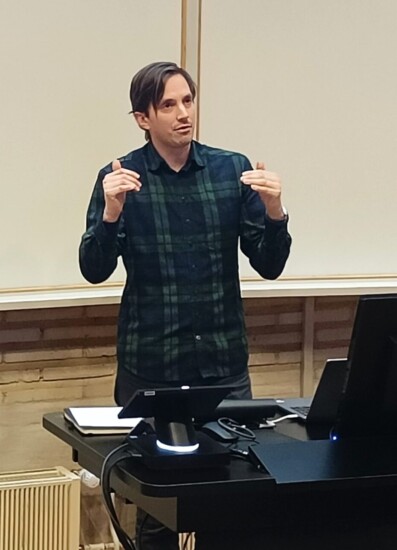
The subjective nature of fairness was also explored by Bruun, Mylly and Jongsma. Jongsma was interested especially in the subjective nature of people’s feelings of fairness and on understanding the morality side of fairness. He noted that the sustainability of a legal system requires it be perceived as fair. Mylly, however, raised the question of who the authority is to interpret what is fair.
Fairness is even more flexible than fundamental rights. Fundamental rights are limiting and anchored in constitution. They have a certain strict interpretation. Could fairness standards be a more adaptive way? – Tuomas Mylly
Mylly started the event by asking, if fairness standards could be a more adaptive way than working through fundamental rights. Fairness could, he noted, possibly be a tool to help adapt IP to the accelerating technological change. He also however questioned: ‘Is the spread of fairness standards a positive development or is it a sign of sloppy legislation in the face of accelerated change? Should we embrace it or run away?’
As Bruun stated in his speech, writing a book on this subject was a ’mission impossible’, yet the authors succeeded impressively. The book opens a whole new discussion, and it raises many intriguing questions that the authors tackle admirably. However, many questions are also left unanswered and the authors concluded by expressing their hope for further research on this topic.
____________
Photo of the book: Nari Lee
Kirjoittajat